Below Grade Stump Grinding in Michigan: What We Check Before We Grind
Below grade stump grinding clears stumps 4-6 inches under the surface for lawns, food plots, and new builds. See how Thickets grinds it right in Michigan.
Below Grade Stump Grinding in Michigan: What We Check Before We Grind
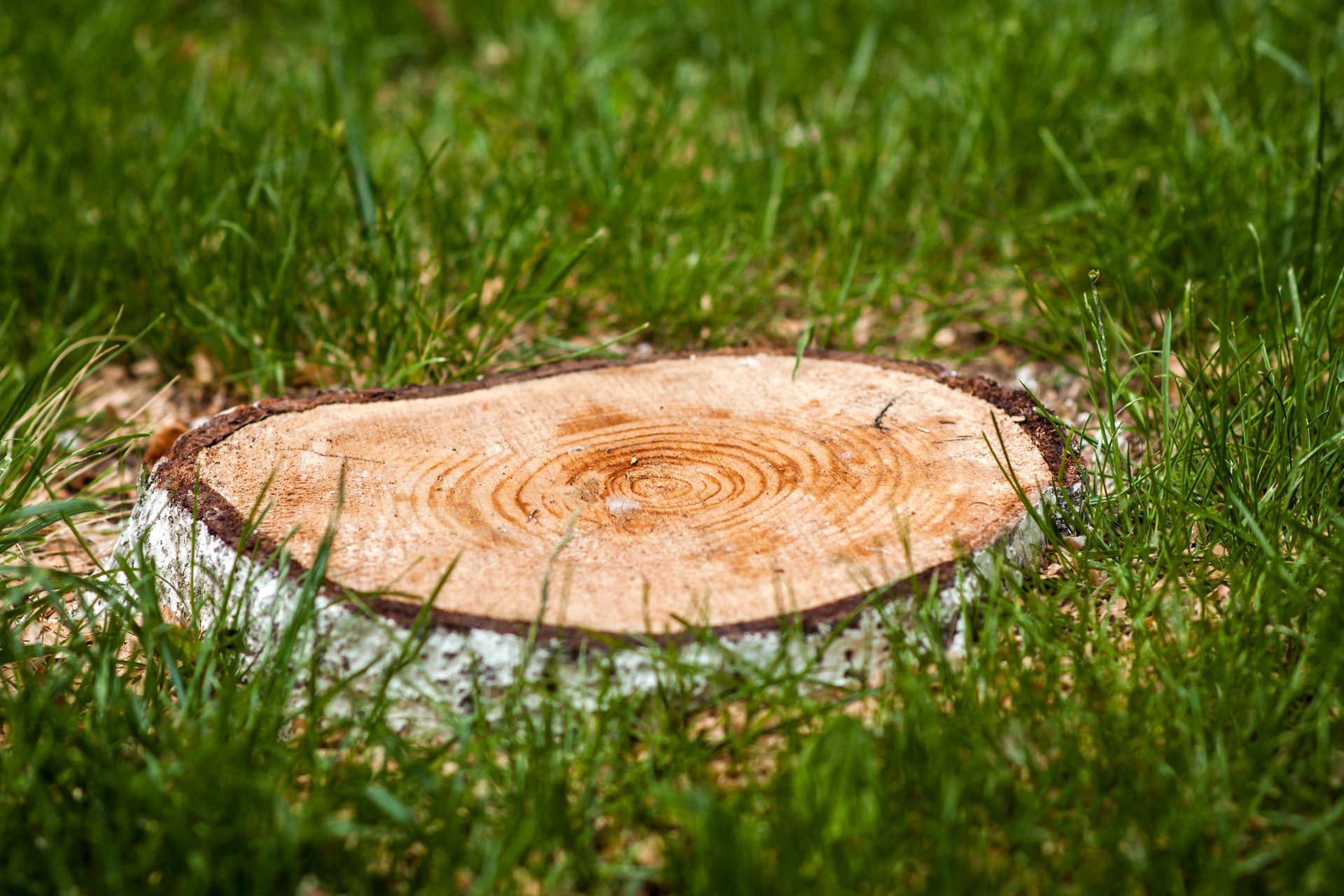
Below grade stump grinding removes a tree stump 4 to 6 inches under the soil surface instead of just at ground level. That extra depth clears the way for a lawn, a food plot, or a new driveway without a stump bump in the middle of it. Michigan landowners use it most after logging, before a build, or when they are turning wooded ground into something they can plant, drive on, or hunt over.
We have ground stumps on new build sites, old farm fields, and hunting properties across Grand Rapids, Gaylord, and Kalamazoo. The question we hear most is not "can you grind my stump." It is "will it actually stay gone." This guide covers what below grade stump grinding involves, how deep it really goes, what it costs, which Michigan tree species behave differently under the wheel, and the local details that catch landowners off guard.
What Below Grade Stump Grinding Actually Means
Below grade stump grinding is the process of grinding a tree stump down past ground level, usually 4 to 6 inches under the soil surface, so no wood is left sitting at or above grade. A rotating cutter wheel chews the stump and the surface roots into wood chips, leaving a shallow depression you can backfill and plant over.
"Grade" is just another word for ground level, the natural surface of the soil around a stump. Grinding below grade means the finished depression sits lower than that surrounding soil line, ready to be filled back in flush with the yard around it.
That is different from a standard grind, which many companies stop at the soil line. A flush cut looks fine for a season. Then the stump decomposes, the ground settles, and you get a dip right where the tree used to stand.
How It Differs From Standing-Level Grinding
A standing-level grind takes the visible wood down to the dirt and stops. Below grade grinding keeps going, past the root flare, into the first several inches of soil. The machine has to work through dirt, rock, and root mass instead of just wood, which is why it takes more time and more skill to do cleanly.
Why "Below Grade" Matters for What Comes Next
If you plan to run a mower over the spot, plant grass seed, or pour a slab, a flush-cut stump will eventually cause a problem. Roots rot, soil compacts, and you end up with a hole later instead of now. Grinding below grade gets that settling out of the way before you landscape, not after.
Did You Know? Studies on root spread generally find that a tree's roots reach two to four times the width of its canopy, not just to the edge of the branches. Grinding the visible stump does not remove all of that root mass. It is why the surface can still settle months after the job is done.
Signs You Need a Below Grade Grind, Not Just a Flush Cut
Not every stump needs the deeper treatment. A stump tucked in a back corner of the woods can usually sit at a standard grind and nobody will ever notice. A few situations call for going below grade instead:
You want grass or a food plot on that spot. Seed and roots both need a stable, settled base. A flush-cut stump under a new lawn almost always shows up later as a dip or a soft patch.
Something permanent is going in nearby. A patio, a driveway edge, a shed pad, or a fence line all need the ground below them to stop moving before you build.
The tree was a heavy resprouter. Some species keep sending up shoots from a shallow cut for years. Grinding deeper cuts that off at the source more often than a surface grind does.
You are selling the property. Buyers notice stumps. A below grade grind with a leveled, seeded patch reads as finished work instead of a job half done.
The stump sits where equipment will cross it later. Mowers, tillers, and food plot equipment all hit shallow-ground stumps eventually. Going below grade gets it out of the way for good.
If none of those apply, a standard grind at the soil line is usually the more affordable, and just as sensible, choice.
How Deep Does Stump Grinding Really Go?
The short answer: most below grade stump grinding goes 4 to 6 inches below the soil surface. That is deep enough to stop regrowth and give you a stable base for grass, food plots, or light landscaping.
The Standard 4 to 6 Inch Range
For most residential and rural stumps, 4 to 6 inches below grade is the sweet spot. It clears the root flare, drops below the zone where a mower deck or tiller would ever reach, and keeps the job affordable. This is the depth we run on the majority of jobs across our Michigan service area.
When We Grind Deeper
Some situations call for going past the standard range, if site conditions allow it:
Construction or hardscape sites. If a patio, driveway, or foundation footing is going in over that spot, extra depth matters for compaction and settling.
Aggressive resprouting species. Species that sucker hard from cut roots benefit from a deeper grind and, sometimes, root treatment to stay down.
Tight replanting plans. Putting a new tree or shrub close to the old spot works better with more clearance below grade.
Depth has real limits, too. Rock, buried pipe, tree lighting wire, or a shallow water line can all stop a grinder short of a deeper target, no matter what the plan called for. Shallow bedrock and glacial till, both common in parts of Michigan, can do the same thing, since the machine can chew through wood and soil but not stone. If your site needs deeper than standard, that is worth flagging when you request a quote so it can be scoped properly.
Pro Tip: If you already know what is going in that spot next, tell your crew before the quote, not on grinding day. Grass seed, a food plot, and a poured slab all call for a different depth, and it is easier to plan for that up front.
The Below Grade Stump Grinding Process, Step by Step
Here is what a below grade stump grinding job looks like from first call to final walkthrough.
Site assessment. We look at the stump's size, species, and surroundings, either with online property tools or an on-site visit, depending on the job.
Quote and scheduling. You get a real number based on stump size and access, not a guess. We walk through pricing, expected depth, and timing before anything gets scheduled, so you know what to expect before the crew ever shows up.
Grinding. A track or wheeled grinder works the stump and surface roots down to target depth, with the chips typically left on-site as usable mulch unless you ask us to haul them off.
Cleanup and walkthrough. We clear debris, check the depth against the plan, and confirm the site is ready for whatever comes next, whether that is seeding, building, or simply calling the job done.
Site Assessment: Why Walking the Property Still Matters
One landowner near Fife Lake called four different contractors before hiring us. Every other company priced the job off photos or a phone description. Our owner, Matt, was the only one who actually walked the property before quoting it, checking the ground itself instead of estimating from a distance.
That is not a one-off. Stumps hide problems: old fence wire grown into the bark, a root system running toward a septic line, soil that turns to soup after rain. A walk of the property catches more of that than a photo ever will, which is why we build it into the quoting process instead of treating it as optional.
It also matters who is running the equipment. Grinding below grade means working blind into soil where a small mistake, a nicked line or a chipped foundation edge, gets expensive fast. We carry insurance for exactly that reason, and we would rather answer a question about coverage before the job starts than after something goes wrong.
The Grind Itself
Grinder choice depends on access. Backyard jobs with a tight gate call for smaller, more maneuverable equipment, while open rural ground can take a larger machine that clears bigger stumps faster. We match the equipment to the site instead of running one grinder for every job, which keeps the work faster and the yard less torn up.
The cutter wheel itself does the real work. It spins fast and sweeps side to side across the stump, shaving off a little wood with each pass rather than punching straight down. Going below grade just means that sweeping motion keeps working past the soil line instead of stopping at it, which is why depth control comes down to operator experience as much as the machine.
Did You Know? Ground stump material takes up noticeably more volume than the solid wood it came from, the same way a stack of firewood takes up more room once it is split into kindling. That is why a "small" stump can leave a surprisingly big pile of chips behind.
We lean toward leaving those grindings on-site whenever the project allows it. Mixed with topsoil, they break down into organic material that helps the surrounding ground, and spread thin around nearby trees or beds, they work as mulch instead of debris hauled to a landfill. It keeps the job lower impact and saves you a haul-off fee, though we will always clear them out if the plan calls for a clean lawn or build site instead.
Michigan Tree Species and How They Grind
Not every stump behaves the same way under the wheel, and Michigan's mix of hardwoods and softwoods makes species a real factor in time and cost. Wood density and root habit are the two things that matter most.
Oak. Dense, tough wood common across West Michigan woodlots. Hardwoods like oak generally take longer to grind through than softer species of the same size, simply because the wood itself resists the cutter wheel more.
Silver and red maple. The trunk wood grinds easily, but maples are known for spreading wide, shallow root systems that reach well past the visible stump. On a maple job, the surface roots are often more work than the stump itself.
Ash. Michigan lost a huge share of its ash trees to the emerald ash borer over the past two decades, and a lot of those stumps are still standing. Dead ash wood tends to be softer and more brittle than living wood, which generally makes it faster to grind, though the root system can be less predictable.
Pine and other conifers. Soft and quick to cut, but sappy. Resin from pine and other conifers can gum up grinding teeth faster than hardwood does, which sometimes means more stops to clear the wheel.
Aspen and poplar. Common on old farm fields and cutover woodlots. These grind easily but are known for sending up root suckers from shallow lateral roots, sometimes for a season or two after a standard cut. This is a species where grinding below grade genuinely pays off.
Pro Tip: If you know the species, mention it when you request a quote. It will not always change the price, but it helps us bring the right equipment and set realistic expectations for regrowth risk.
What Below Grade Stump Grinding Costs in Michigan
Stump grinding is usually priced by the diameter of the stump measured at ground level, then adjusted for a few other factors.

Michigan's mixed soils add another wrinkle. Clay-heavy ground common across the Lower Peninsula packs tight around roots and can slow a grind compared to sandier soil up north. Rocky ground dulls grinding teeth faster too, which is worth mentioning if you are comparing quotes and wondering why one number is higher than another.
As a general rule, a single small-to-mid-sized stump with easy access sits toward the low end of most quotes, while a cluster of large hardwood stumps left after a logging job runs higher. Multiple stumps on the same trip usually cost less per stump than booking separate visits, since the crew and equipment are already on-site.
For an exact number on your property, the fastest path is a real quote rather than a rule of thumb. You can start that through our below grade stump grinding page.
Stump Grinding vs. Full Stump Removal
These two options solve the same problem in different ways, and picking the wrong one gets expensive.

For most Michigan landowners planning a lawn, a food plot, or a driveway edge, grinding gets the job done at a fraction of the cost and disruption of full removal. Removal earns its keep when the plan calls for digging in that exact spot anyway, like a new foundation or a septic install.
Michigan-Specific Considerations Before You Grind
A few things matter more here than in a generic how-to guide.
Call MISS DIG 811 First
Michigan law requires a call to MISS DIG 811 at least three business days before any digging project, and that includes stump grinding. Grinding below grade means cutting into soil, not just wood, and a lot of stumps sit closer to buried gas, electric, or water lines than homeowners expect. The call is free, and skipping it risks real damage and real fines.
Permits and Local Rules Vary by Township
Permit rules for removing a tree in Michigan are set locally, not by the state, and they vary a lot. Some cities require a permit once a tree passes a certain trunk diameter, commonly 6 to 7 inches, while others regulate historic or landmark trees, or set separate rules for clearing more than an acre or two at once. Grinding a stump generally comes after that tree is already down, but if your project also involves taking down a standing tree or clearing a larger wooded area, it is worth a quick call to your local zoning or building department before work starts. The MISS DIG 811 call above is the one step that applies almost everywhere, permit or not.
Frost, Clay Soil, and Timing
Michigan's clay-heavy soil, common across the Grand Rapids and mid-Michigan corridor, holds moisture and compacts tight around roots. That can slow a grind compared to looser soil, and it also means freshly ground sites settle more as the ground dries out and the wood breaks down. Late fall through early spring, when the ground is firmer, is often easier on equipment than a wet Michigan spring.
Working Near Established Trees and Structures
Michigan properties are rarely a blank field. A stump near a mature tree means working around a root system that may be sharing space with the one being ground, and cutting too close can stress a tree you meant to keep. Stumps near a septic field, a well head, or a foundation call for the same care as the utility check, since roots and buried infrastructure do not always show up where a property survey says they should. We flag these on the initial walk so there are no surprises once the grinder is running.
Prepping for What's Next
What you plan to do with the spot changes how we approach the grind:
New lawn. Grind below grade, then backfill with topsoil so the grade settles evenly under grass.
Deer food plot. We often coordinate stump grinding with our wildlife habitat development work so the ground is ready for tilling and seeding in the same season.
New build or driveway. Pair grinding with our land clearing services if there is more than a stump standing between you and a buildable lot.
Did You Know? Wood chips and shavings left in the soil after a grind can tie up nitrogen as they break down, which is part of why grass sometimes struggles right on top of a fresh grind before it fully settles. University extension research on stump removal backs this up and recommends hauling off heavier grindings before planting turf directly over the spot. A season of topsoil and patience usually solves it either way.
After the Grind: Chips, Holes, and Settling
Grinding leaves two things behind: a pile of chips and a shallow depression where the roots are still decomposing underground. Most jobs leave the chips on-site since they work well as mulch elsewhere on the property, though we will haul them off on request.
The depression underneath keeps settling for months, sometimes longer, as the remaining root mass breaks down. If you are planning to seed grass or level the site for a food plot, running our power rake services over the area a season later smooths out that settling and gets the seedbed ready, instead of fighting a soft, uneven patch of yard.
Full decomposition of the remaining roots underground can take anywhere from one to several years, depending on species and moisture. That is normal, and it does not mean the grind was done wrong. It just means the ground above it may need a light topsoil top-off once or twice as things settle, the same way any disturbed soil does.
How Below Grade Stump Grinding Fits a Bigger Land Project
Stumps rarely show up alone. A single below grade grind often sits inside a larger plan, and it helps to know where it fits.
After a logging job, stumps are usually just one piece of a messier picture that includes slash piles, damaged undergrowth, and compacted skid trails. Pairing stump grinding with broader forestry mulching work clears the rest of the site in the same visit instead of leaving it for a second trip.
Ahead of a new build, stump grinding is often the last step after heavier clearing work. If there is more standing timber or brush between you and a buildable lot, that comes first through land clearing, with stump grinding closing out the site once the rest is gone.
For landowners managing several acres over multiple seasons, a written land management plan through our land management consultation service can map out where stump grinding, mulching, and habitat work each make sense over time, instead of tackling each project as a separate, disconnected job.
Wrapping Up
Below grade stump grinding gets a stump out of your way for good, not just out of sight for a season. Done at the right depth, with the right prep for what comes next, it clears the ground for a lawn, a food plot, or a build site without the settling problems a flush cut leaves behind. The depth, the species, and the Michigan soil under your feet all shape how the job goes, which is why a real quote beats a rule of thumb every time.
If you have a stump, or a dozen, standing between you and your next project, contact Thickets Habitat & Land Works for a free quote. We will walk the property, not just guess from a photo, and give you a straight number before any equipment shows up.
Frequently Asked Questions
How deep does stump grinding go? Most below grade stump grinding reaches 4 to 6 inches below the soil surface, which is enough to stop regrowth and support grass or light landscaping. Jobs tied to construction or aggressive resprouting species sometimes call for going deeper, depending on site conditions.
Is stump grinding better than stump removal? Grinding is faster, cheaper, and leaves a smaller mess than full removal, making it the better fit for lawns, food plots, and general landscaping. Full removal only makes sense when a project needs every root gone, like a new foundation footprint.
Can I plant grass or a tree where a stump was ground? Yes, though grass usually does best after a season of topsoil and settling since fresh wood chips in the soil can tie up nitrogen. Trees and shrubs should generally go a few feet off-center from the old stump rather than directly on top of it.
How long does stump grinding take? Most residential stumps are done in a matter of hours from setup to cleanup, though larger stumps, multiple stumps, or tough access can add time. A same-day quote will give you a realistic window for your specific property.
Will the stump grow back after grinding? A properly ground stump will not regrow a tree, though some species can send up small root suckers nearby for a season or two. Grinding below grade at the recommended depth greatly reduces the chance of any resprouting.